
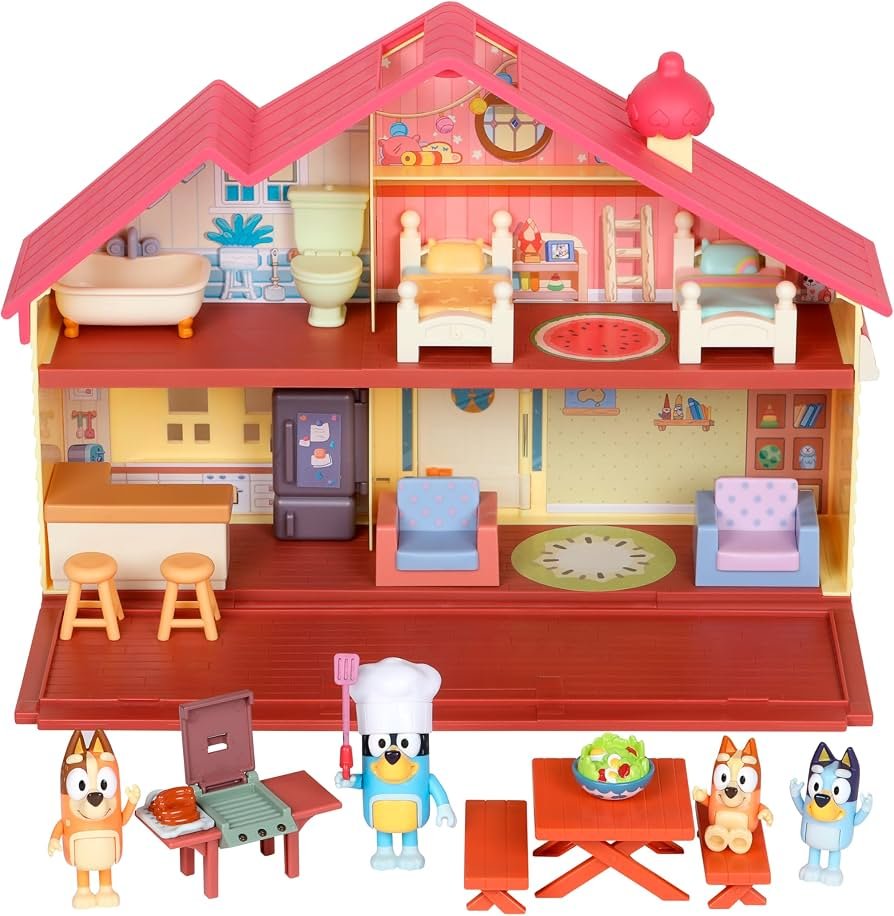
Best Bluey Toys for Christmas Gifts: Playsets, Characters, and House Sets Worth Wrapping
Finding the right bluey christmas gifts means understanding what makes each toy special beyond its packaging. Whether you’re shopping for a toddler who reenacts every episode or a preschooler building their first imaginative worlds, Bluey toys span a range from simple character figures to elaborate playsets that recreate the show’s most memorable moments.
We’ve designed our lineup to mirror the show’s blend of open-ended play and familiar scenes. This guide walks through what to consider when choosing between standalone figures, themed sets, and the larger house toy that anchors many kids’ collections.
Why Playsets Anchor Bluey Collections
Playsets do more than hold figures—they give kids a stage for the stories they invent. The modular design of most Bluey playsets lets children rearrange rooms, swap accessories, and build scenarios that drift far from any single episode. That flexibility matters more than matching screen accuracy.
Look for sets with movable parts like opening doors, removable furniture, or clip-on accessories. These details extend play sessions because kids can reset the scene without starting over. Sets that include at least two figures also solve the common problem of needing a second character to make dialogue work, which single-figure packs leave unresolved.
Character Figures That Work Alone or in Groups
Individual character figures fill different roles depending on whether they’re a first purchase or an addition to an existing collection. Bluey and Bingo anchor most setups, but secondary characters like Muffin, Socks, or Rusty let kids recreate specific episodes or invent crossover stories the show hasn’t aired yet.
Figures with articulated limbs or poseable joints hold poses longer during play, which matters when kids set up scenes and walk away to grab another toy. Fixed-pose figures work better as collectibles or cake toppers than active play pieces. According to Wikipedia’s overview of action figures, articulation has been a defining feature of play figures since the category emerged, distinguishing toys meant for manipulation from static display models.
The House Toy as a Central Play Hub
The Bluey house toy recreates the Heeler family’s home across multiple rooms, giving kids a familiar layout they’ve seen in dozens of episodes. The value here isn’t just recognition—it’s that kids already know which room hosts which kind of story, so they skip the setup phase and start playing faster.
Larger house sets with removable roofs or hinged walls let kids access every room without repositioning the whole structure. That accessibility matters during group play when two kids want to control different spaces simultaneously. Sets that include kitchen accessories, bathroom fixtures, or bedroom furniture reduce the need to scavenge pieces from other toy lines, keeping the aesthetic consistent and the play less interrupted.

Sizing Compatibility Across Different Toy Lines
Bluey toys follow a semi-standard scale, but mixing brands or special-edition releases can create size mismatches where figures don’t fit through doorways or accessories look oversized next to characters. Before combining sets from different manufacturers, check whether the figure height matches the door and furniture dimensions in the playset you already own.
Most official playsets use a 2.5-to-3-inch figure scale, which keeps characters proportional to furniture and vehicles. Off-brand or boutique releases sometimes shift that ratio to make figures more detailed, creating a mismatch when kids try to use them together. Sticking within one product line avoids that frustration, especially for younger kids who notice when a character suddenly towers over a bed meant for them.

Gift-Wrapping Strategies for Bulky Playsets
Large playsets arrive in packaging designed for retail shelves, not gift presentation. The boxes often feature try-me windows, promotional text, and assembly instructions printed on every panel, making them hard to wrap neatly without covering critical info or creating lumpy seams.
One approach: leave the set partially assembled inside the original box, wrap just the box’s top and sides, and use a large gift bag for the base. This preserves the unboxing moment while keeping instructions visible. Alternatively, fully assemble the set beforehand and present it as a display, skipping the wrap entirely. Kids lose some surprise but gain immediate play, which often matters more on Christmas morning when competing toys vie for attention.
Building a Bluey Christmas Around Play, Not Just Collection
The best bluey christmas gifts balance immediate play value with long-term expansion potential. A house toy or central playset gives kids a home base, while character figures and accessories let them grow the world as interests evolve. Avoid front-loading the collection with every available piece—kids often treasure the toys they receive gradually more than a complete set delivered all at once.
Watch how your child plays with existing toys before adding more. If they narrate elaborate stories, prioritize characters and props that feed those scenarios. If they focus on building and arranging spaces, another playset or vehicle expands their creative canvas. Matching the gift to the play style, rather than checking off a product category, turns a good present into one that sees daily use well past December.
Notes
Most Bluey playsets suit ages three and up due to small accessories and assembly steps. Individual figures work for younger toddlers around 18 months who focus on holding and carrying characters rather than manipulating environments.
Playsets require enough hand strength to clip accessories and open hinged doors, which develops around age three. Younger kids often enjoy figures alone until their fine motor skills catch up to the playset’s interactive features.
Bluey figures use a scale close to many preschool toy lines, but exact compatibility varies by brand. Doorways and furniture in Bluey playsets typically fit figures between 2.5 and 3 inches tall, which overlaps with some dollhouse and animal-figure sets.
Test compatibility by comparing figure height to the playset’s door openings before assuming a match. Even within compatible scales, furniture proportions may look off when mixing brands, though most kids adapt their play to accommodate the mismatch.
A functional starter collection pairs one playset with four to six character figures, giving kids enough variety to assign roles without overwhelming storage. Bluey, Bingo, Bandit, and Chilli form the core family, with one or two friends like Coco or Snickers adding story options.
Starting larger than six figures often leads to unused characters sitting in a bin because kids default to familiar faces. Build out gradually as play patterns reveal which secondary characters get requested most.
Most Bluey house toys rely on manual interaction—opening doors, moving furniture, placing figures—without electronic components. This keeps play quiet and avoids the battery-replacement cycle that interrupts other toys.
Some special-edition or deluxe house sets include sound buttons or light-up features that need batteries, but these remain optional add-ons rather than core functionality. Check the product description if electronic features matter for your household’s preference or battery budget.
Standard Bluey playsets don’t include built-in connectors for linking multiple sets, but their open-sided design lets kids place them side by side to form a compound layout. The lack of locking mechanisms means sets can shift during play, which younger kids may find frustrating.
Using a large play mat or foam-board base underneath multiple sets stabilizes the arrangement and defines the play zone. This approach also contains small accessories that otherwise scatter across the room, making cleanup faster.
Gift-worthy Bluey toys either introduce a new play mechanic—like a vehicle or outdoor playset—or complete a scene kids have been improvising with mismatched pieces. Ask what the child currently uses as a stand-in for missing elements; that gap often points to the most appreciated gift.
Duplicating figures or sets the child already owns rarely adds value unless the goal is enabling sibling play without sharing. Focus on expanding the play world’s geography rather than reinforcing what’s already covered.